Hazard Recognition & Risk Mitigation
Project Overview
I designed and developed a performance-driven safety learning solution that enabled employees to proactively identify, assess, and control workplace hazards. The goal was to move beyond compliance-focused training and build practical decision-making capability that could be applied in dynamic work environments.
The program translated complex occupational health and safety legislation into a simplified, actionable framework that frontline employees could use in real time. The solution focused on reducing injuries, improving operational efficiency, and creating a shared language around risk and prevention.
Business Challenge
The organization needed to standardize safety training across multiple provinces while ensuring alignment with varying legislative requirements. Existing training was compliance-focused, knowledge-heavy, and lacked real-world application. As a result:
- Hazard reporting and risk assessment practices were inconsistent
- Employees struggled to prioritize risk in complex situations
- Musculoskeletal injuries such as strains and sprains remained high
- Managers spent significant time reinforcing safety procedures
- The organization wanted to shift from reactive incident response to proactive prevention
The solution needed to support both compliance and capability while driving measurable behavior change.

Strategic Goals
The project was aligned with measurable business and operational outcomes:
- Achieve 100% compliance with provincial OH&S training requirements
- Reduce reportable incidents and near-misses by 15% within one year
- Decrease lost-time injuries related to musculoskeletal risk
- Standardize hazard identification and assessment across all job sites
- Increase frontline ownership of safety decisions
Learning Architecture
The course followed a structured performance pathway designed to mirror how employees encounter risk in real work environments:
- Safety mindset and beliefs
- Hazard awareness and classification
- Legal and organizational expectations
- Hazard identification techniques
- Risk assessment and prioritization
- Control strategy selection
- Real-world application through Field-Level Hazard Assessments
- Performance-based evaluation
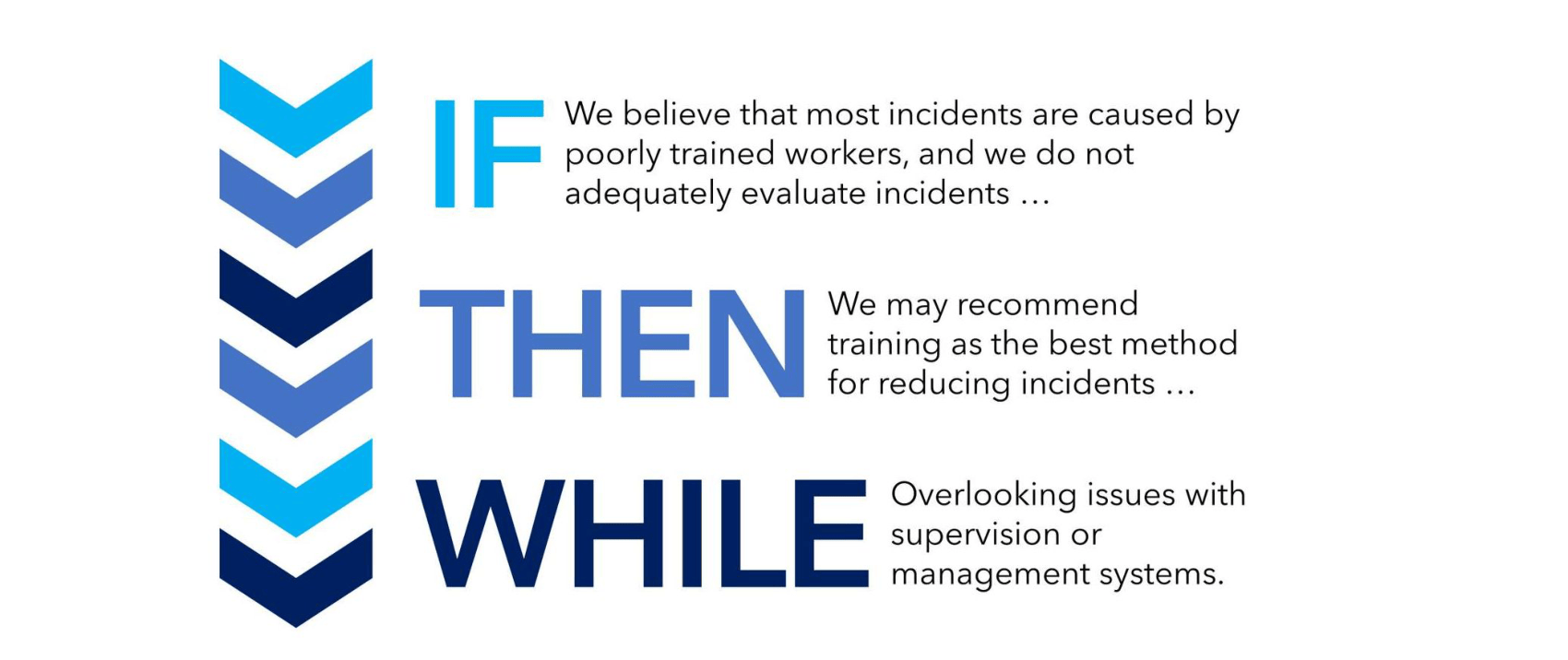
The course began by addressing safety beliefs and attitudes, recognizing that mindset strongly influences hazard recognition and decision-making. This supported a shift from blame-focused safety to systems thinking and proactive risk management.
Instructional Design Approach
Scenario-First Design
Rather than focusing on information delivery, the course emphasized decision-making and real-world application. Learners practiced identifying and evaluating hazards in realistic workplace scenarios such as:
- Chemical exposure during furniture finishing
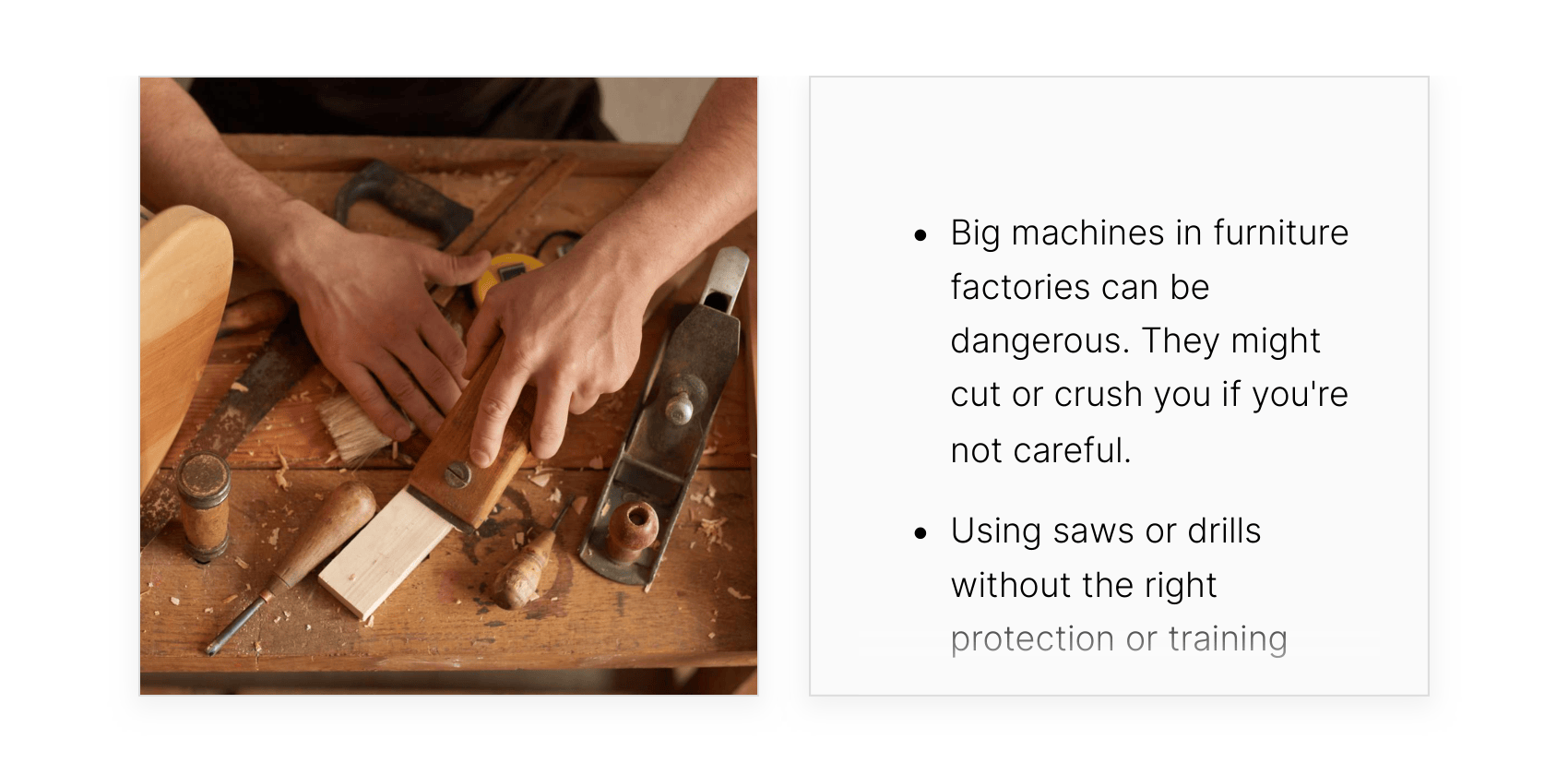
- Machine and equipment hazards
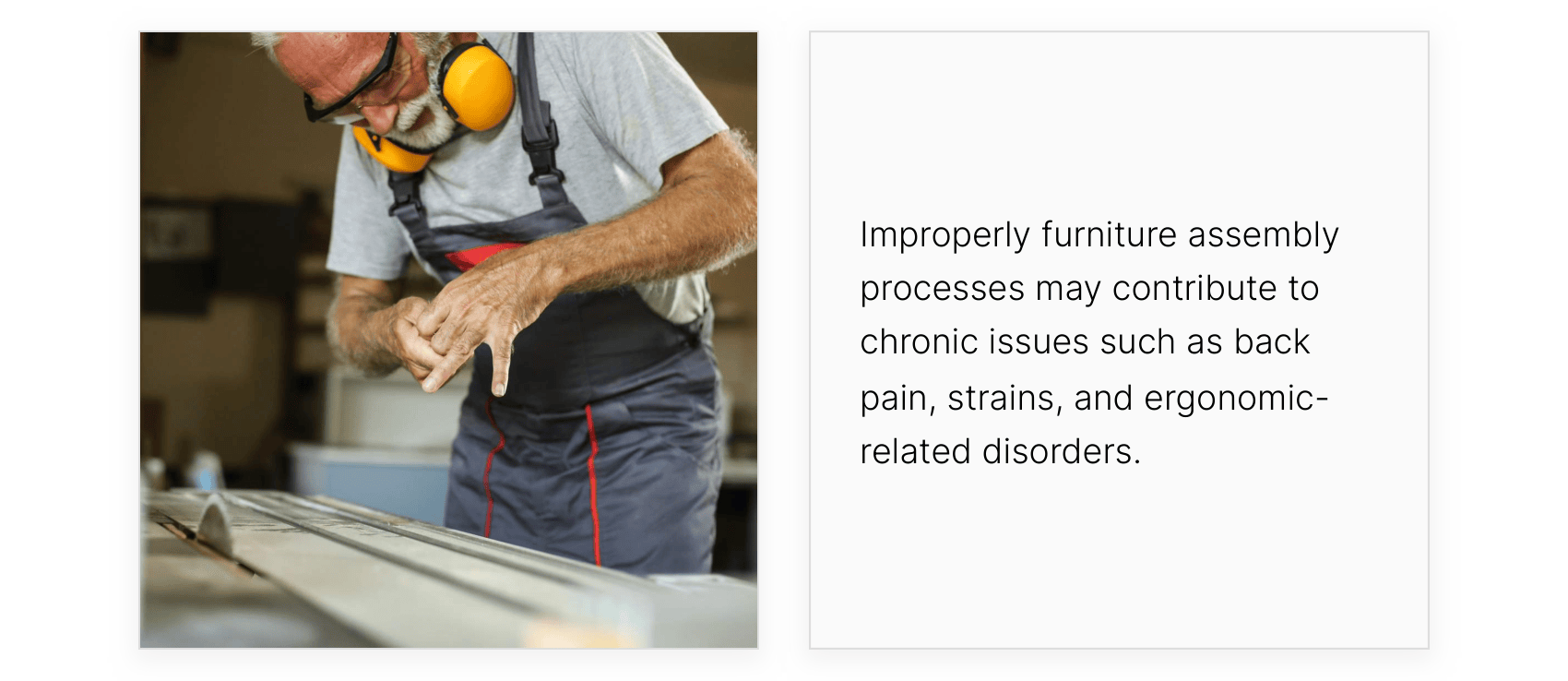
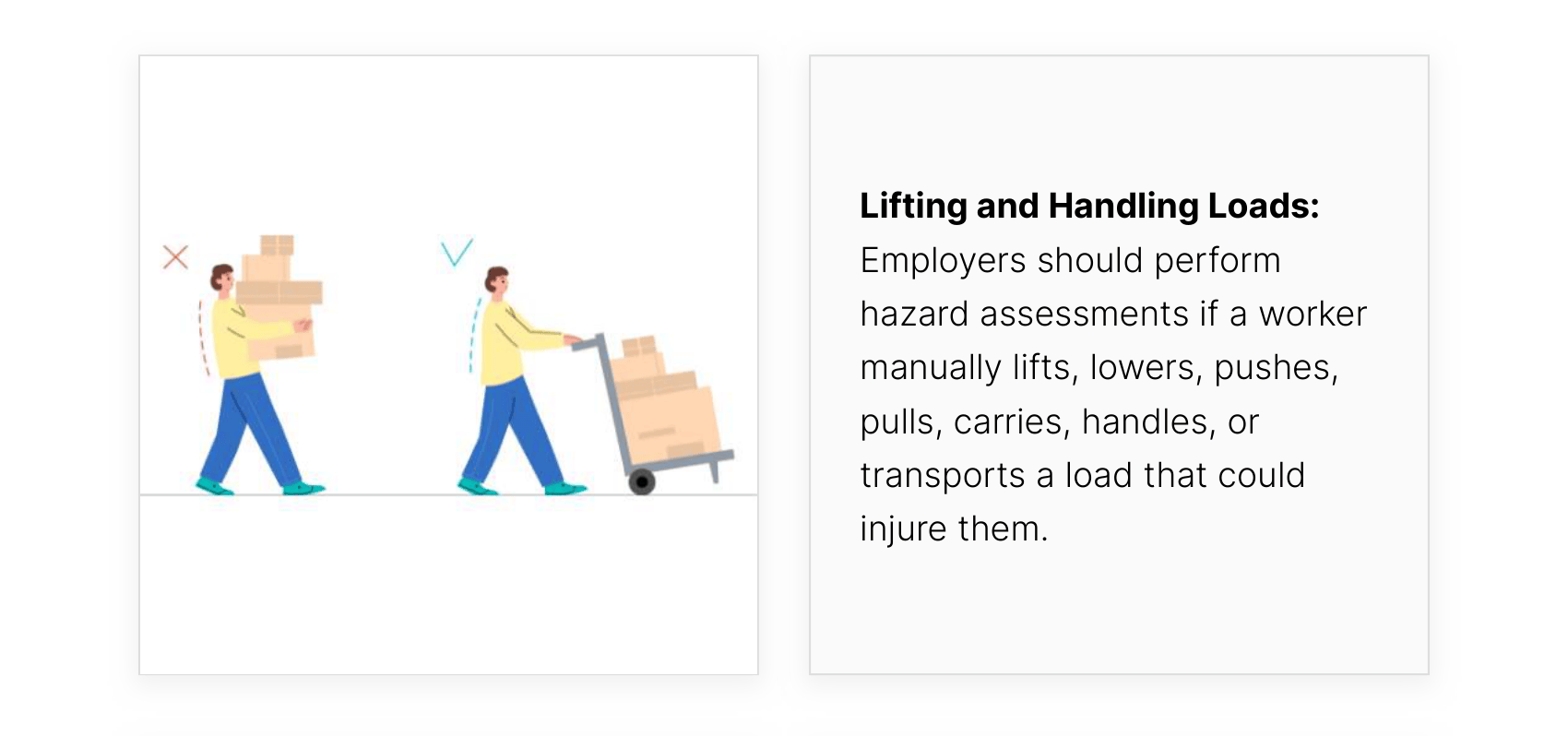
- Manual handling and musculoskeletal risk
- Delivery and field work environments
- Changing worksite conditions
This approach built confidence and transfer of learning to the job.
Progressive Complexity
The learning experience moved from guided examples to independent application. Early activities focused on awareness and classification, while later modules required learners to independently assess risk and select control strategies.
This scaffolded design improved retention and reduced cognitive overload.
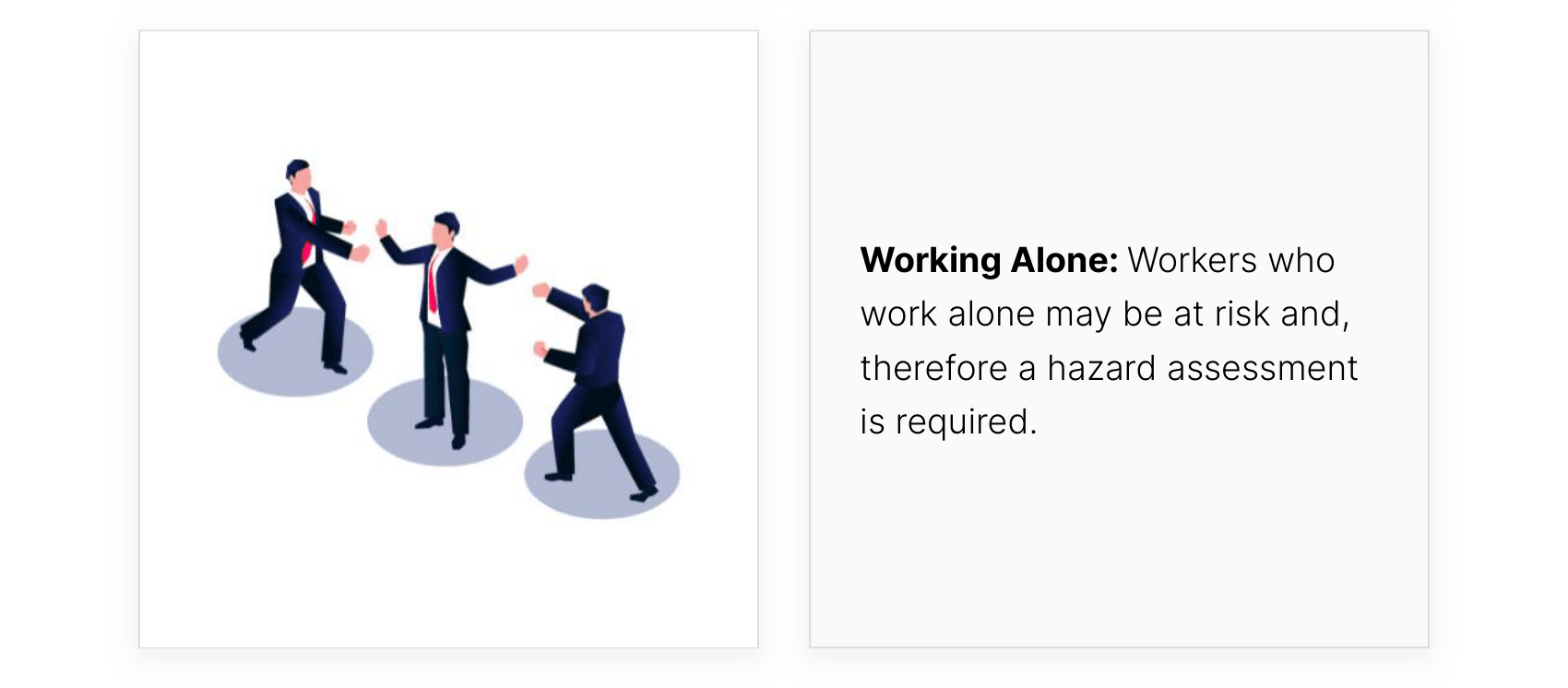
Interactive Discovery
The course incorporated interactive exploration to increase engagement and reflection:
- Flip-card activities for hazard recognition
- Interactive tabs for legislation and control strategies
- Drag-and-drop classification
- Guided risk ranking
- Embedded knowledge checks
These interactions promoted active learning rather than passive consumption.
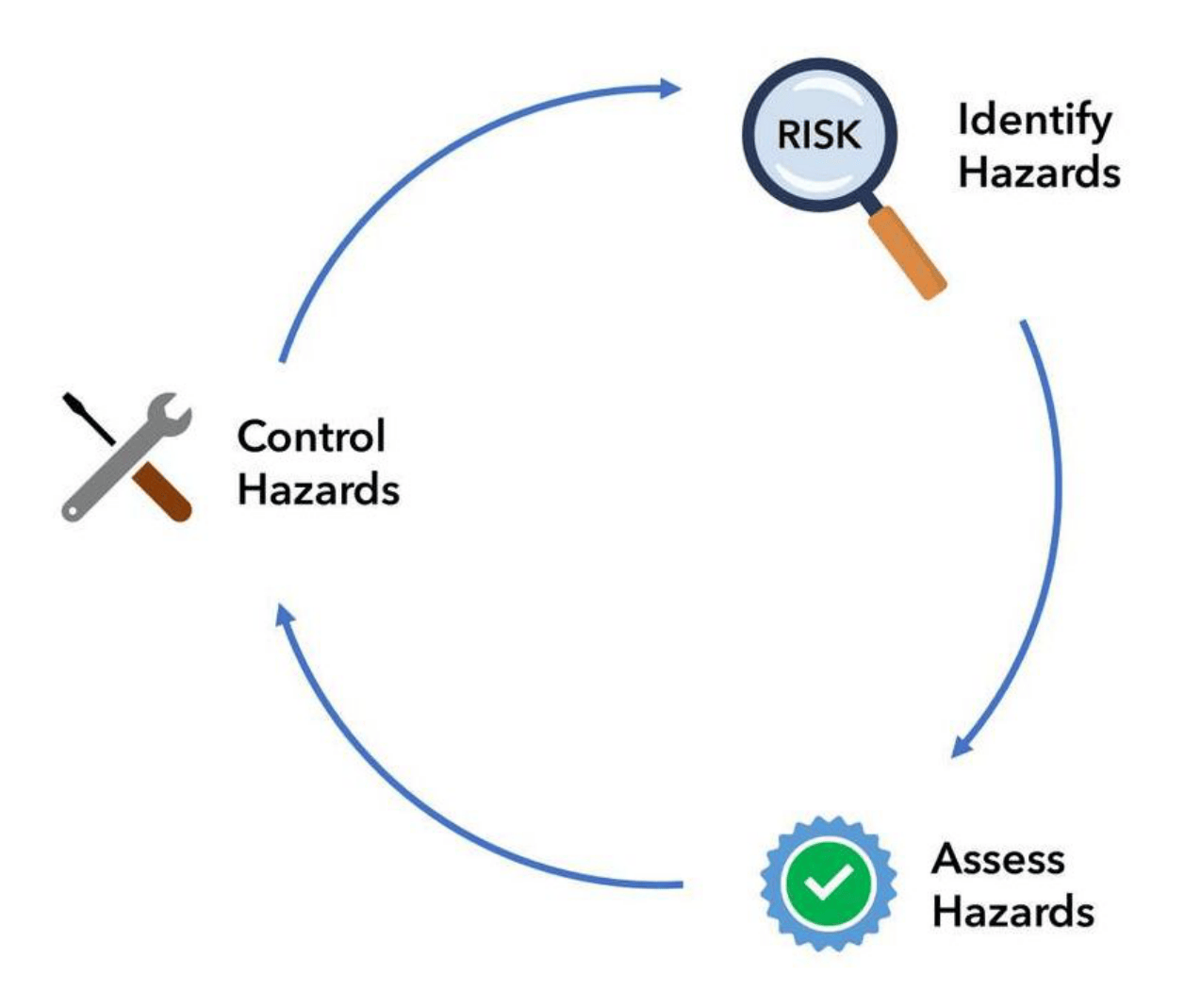
Simulation & Decision Practice
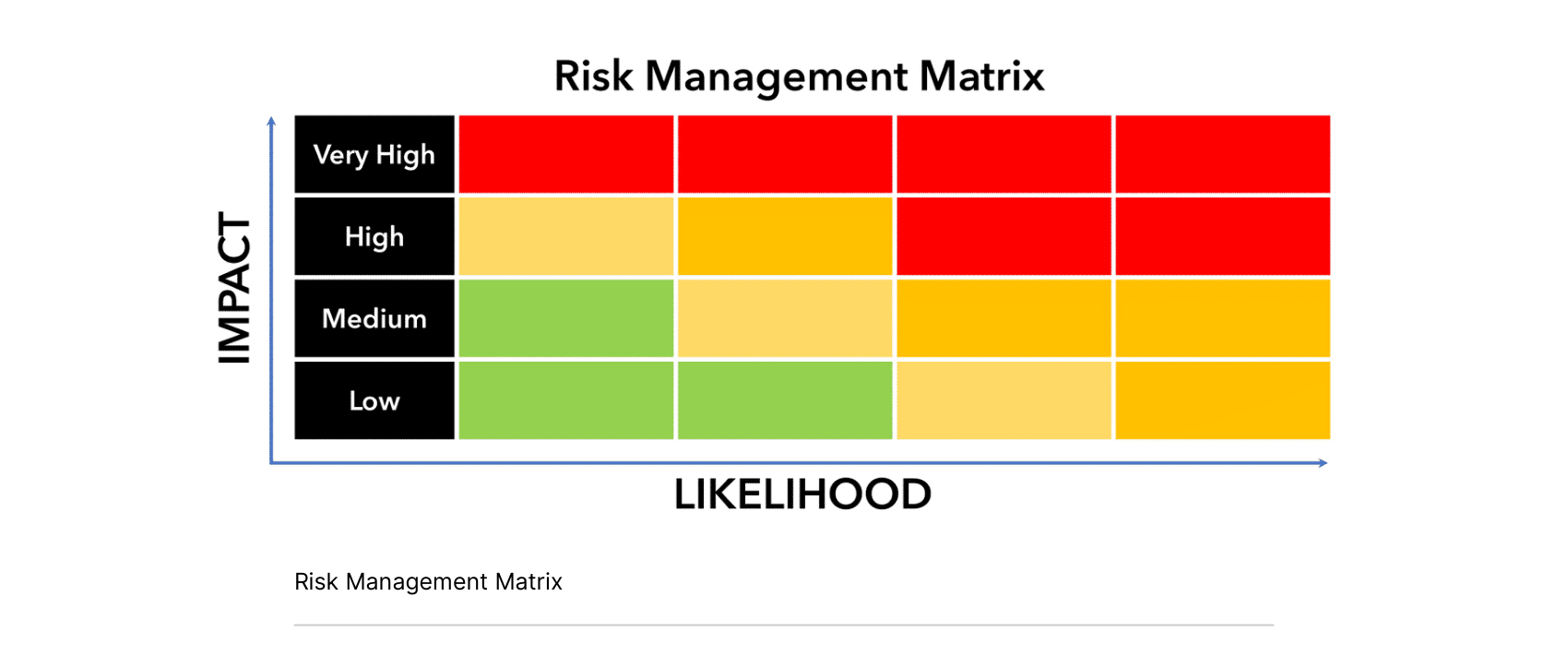
One of the most critical design elements was an interactive risk assessment experience. Learners evaluated hazards by assigning values for:
- Probability of occurrence
- Severity of consequences
- Frequency of exposure
They then observed how these factors influenced overall risk priority. This transformed a theoretical risk matrix into a practical decision tool that aligned directly with real workplace assessments.
The simulation reduced subjectivity in decision-making and reinforced consistent risk evaluation across job sites.
Behavioral & Cultural Design
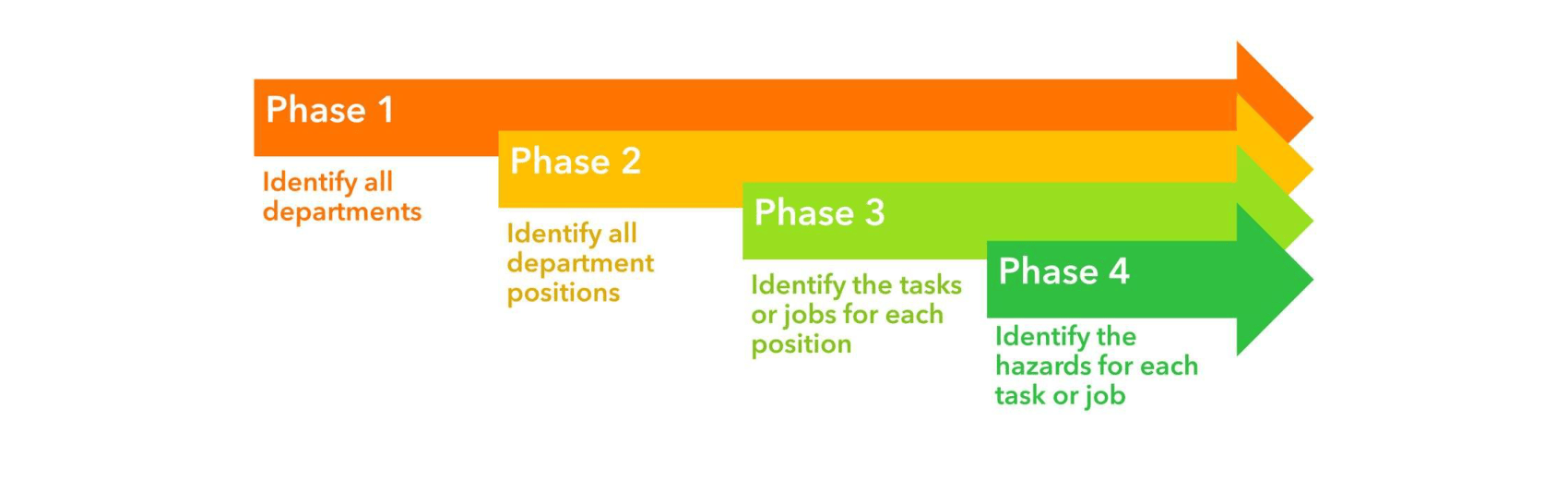
The course emphasized that incident prevention is influenced by both individual behavior and organizational systems. By addressing underlying beliefs, the program supported a culture shift from reactive safety and blame toward proactive risk awareness and shared responsibility.
Learners explored how personal experience, perception of risk, and workplace culture influence decision-making. This helped build stronger psychological ownership of safety.
Performance Transfer & Real-World Application
A key focus was ensuring that learning transferred beyond course completion. The program introduced both:
- Formal hazard assessment processes
- Field-Level Hazard Assessments (FLHAs)
Learners practiced identifying new and changing hazards in dynamic work environments. This supported ongoing safety awareness and adaptability in field and delivery contexts.
The FLHA framework provided employees with a structured, repeatable decision process that could be used daily.
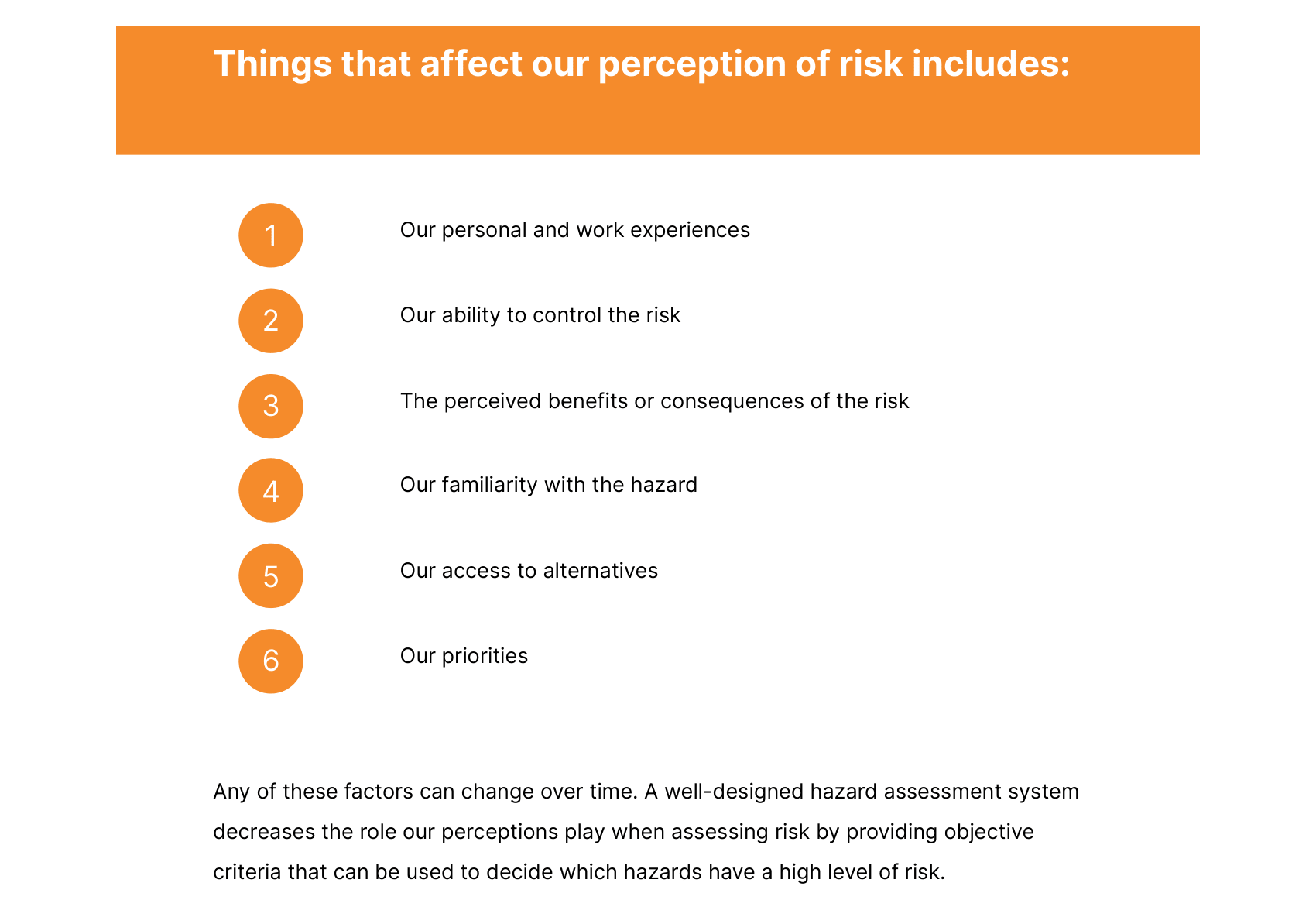
Assessment Strategy
The assessment approach focused on performance rather than memorization. Instead of traditional quizzes alone, learners were required to:
- Identify hazards in real-world scenarios
- Prioritize risks based on severity and exposure
- Select appropriate control strategies
- Apply the hierarchy of controls
- Demonstrate decision-making capability
This aligned evaluation with actual job tasks.
Tools & Technology
- Articulate Storyline
- Scenario-based learning design
- Interactive simulations
- Agile development methodology
- Mobile-friendly and accessible design
Results & Business Impact
Performance: Post-course assessment scores averaged 94%, significantly exceeding the 80% pass threshold.
Behavior Change: Field-Level Hazard Assessments increased by 40% in the first quarter, demonstrating strong transfer of learning.
Operational Efficiency: Standardization reduced coaching and rework, saving managers approximately 10 hours per month.
Cultural Impact: The program created a shared framework and language for discussing safety and risk, improving collaboration between frontline teams and leadership.
Stakeholder Feedback
“This course has given us a common language and framework for discussing safety. We’re now
having more proactive conversations about risk instead of reactive ones about
blame.”
— Safety Department Lead
Reflection & Next Steps
This project reinforced my belief that effective safety learning must move beyond compliance and focus on real-world decision-making. When learners repeatedly practice applying frameworks in realistic environments, measurable behavior change becomes possible.
Future enhancements could include:
- Adaptive learning pathways based on role
- AI-driven safety simulations
- Integration with real incident data
- Predictive risk analytics